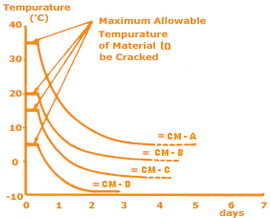
 Loading
Loading
Loading
Once mixed with water and poured into drilled holes, Crackit sets and pushes outward with expansive pressure up to 11 MT/m². That internal force opens cracks through the rock or concrete; you finish the job with a breaker, excavator, or pick as usual.
At full reaction the expansion can exceed 122 MPa (11,200 T/m²) — well above the tensile limits of most stone and concrete. Typical rock tensile strength runs 5–25 MPa; reinforced concrete often fails around 3–5 MPa in tension.
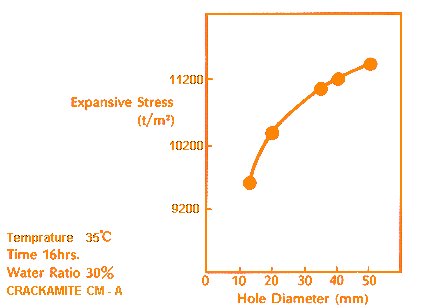
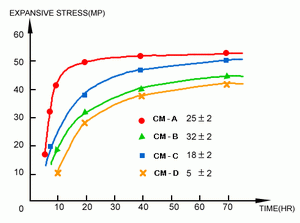
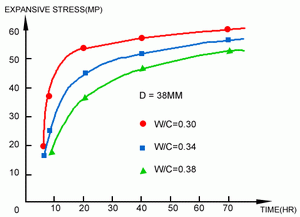
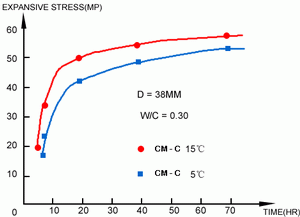
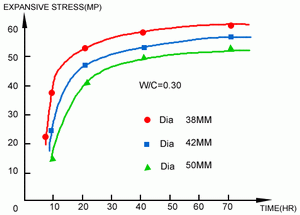
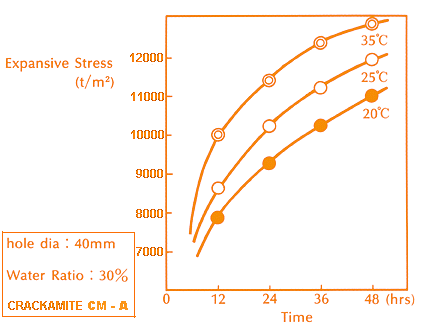
After pouring, pressure inside each hole rises over time — reaching roughly 11,000 T/m² at room temperature within about 24 hours. The process is gradual: cracks start at the hole wall, spread outward, and widen as expansion continues. That's different from instantaneous shattering from a blast charge.
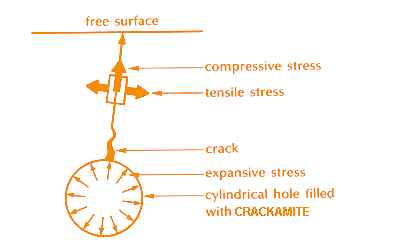
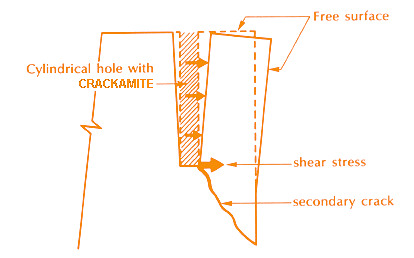
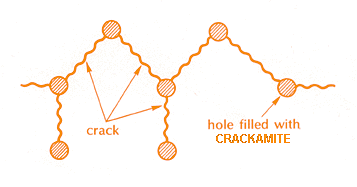
Tensile stress at right angles to the hole wall initiates the first cracks (Fig. 1). As pressure keeps building, existing cracks grow and new ones form. A single hole usually produces two to four fracture lines. With a free face nearby, shear stress opens the gap and a secondary crack often runs toward that surface (Fig. 2).
With a properly spaced grid of holes filled with Crackit, fractures link between neighbours as planned (Fig. 3). Hole depth, spacing, and angle let you steer the break direction on site.
Vertical holes alone in deep cuts often produce horizontal cracking without much opening — the rock has nowhere to move. For trenching, shafting, or tunnelling, drill some holes on an angle or run a pre-split line first so the mass has at least two free surfaces to expand toward.