Pour the mixed slurry into your drilled holes right away — within about 10 minutes of mixing. Once it starts to stiffen, don't add more water; that weakens the batch.
Pouring into drilled holes
Work through these points as you fill each hole:
- Get the slurry into holes within 10 minutes of mixing. After that it thickens and won't pour cleanly — never add water to loosen an old batch; that cuts strength and can cause blow-outs.
- Use a bucket with a spout or a funnel. For horizontal bores, a grout pump works best — drill with a slight slope so the mix flows in.
- Fill every hole level with the top — no short fills.
- Horizontal holes can be sealed as the mix sets to a clay-like consistency at the mouth.
When to use a polythene liner
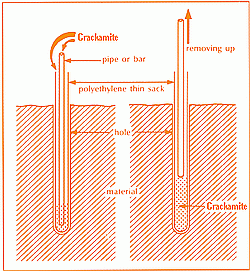
- Water in the hole? Line it with a thin poly bag sized to the bore, hold it open with a wooden rod, and pour Crackit inside. The mix displaces water without losing strength.
- Use liners when the rock is heavily jointed, has voids, or the slurry leaks out of the hole.
- On very dry concrete that soaks up water from the mix, a liner helps — or lightly spray the face first. Avoid adding water in cold weather; it may freeze in the bore.
- Underwater or in flowing water, always line the hole. Fill via bucket or pump, then tie off the bag top. If water isn't moving at the mouth, you can pump directly into the hole to displace water gently.
After filling
- Don't leave leftover slurry sitting in the bucket — discard it safely to avoid blow-outs.
- No tamping, mortar cap, or plug needed. Leave holes open and wait for cracks. A tarp over filled holes keeps rain out until the reaction starts.
- Once cracks show, misting the surface with water can widen gaps and speed the break.
 Loading